

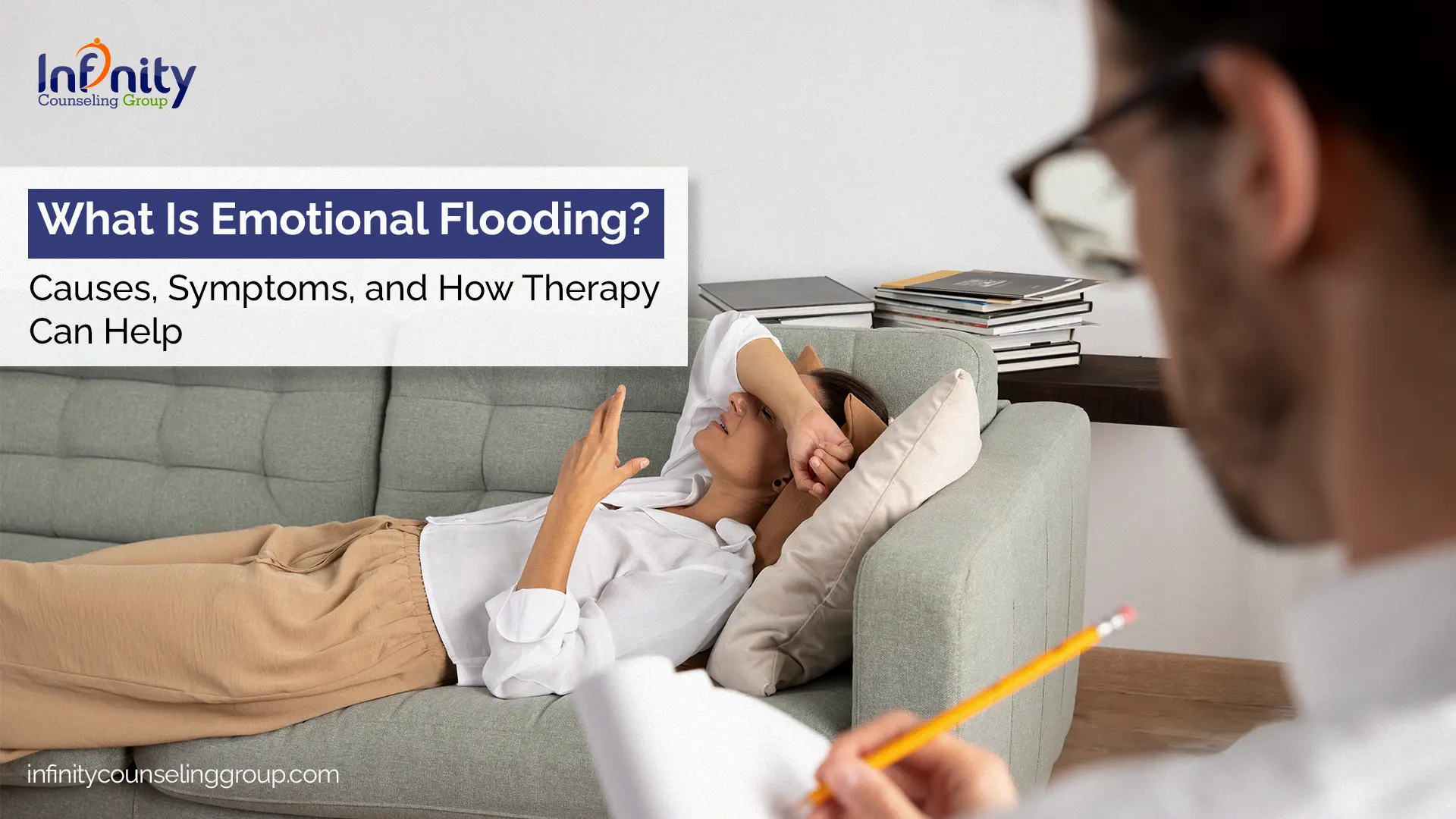
Have you ever felt so overwhelmed with emotion that your mind went blank, your heart raced, and even simple conversations felt impossible? That experience may be emotional flooding, and if it’s happened to you, you’re not alone.
Emotional flooding can feel frightening, confusing, and isolating. Many people worry they’re “too sensitive” or “bad at handling emotions,” but emotional flooding is not a personal failure. It’s a nervous system response, and with the right support, it’s manageable.
Let’s look into what emotional flooding is, why it happens, and how therapy, especially Mental Health Skill Building and Mental Health Outpatient Therapy, can help you regain emotional balance.
What Is Emotional Flooding?
Emotional flooding occurs when your nervous system becomes overwhelmed by intense feelings all at once. Instead of processing emotions gradually, your brain goes into survival mode, making it hard to think clearly or respond calmly.
In psychology, this is often referred to as flooding, a state where emotional input exceeds your ability to regulate it. If you’ve ever searched “what is flooding in psychology“ or “what is emotional flooding,” the core idea is the same: your emotional system is overloaded.
This can happen to adults, teens, and even children, especially during moments of conflict, stress, or emotional vulnerability.
What Emotional Flooding Feels Like
Everyone experiences emotional flooding differently, but common signs include:
- Feeling overwhelmed with emotion suddenly
- Rapid heartbeat or shallow breathing
- Difficulty speaking or thinking clearly
- A strong urge to shut down, cry, or escape
- Feeling emotionally numb or overstimulated
- Being overwhelmed emotionally, even by small triggers
Some people describe it as their emotions “crashing in all at once.” Others say it feels like their body reacts before their mind can catch up.
These flooding emotions are not a sign of weakness; they’re a sign your nervous system is under strain.
Why Emotional Flooding Happens
Emotional flooding doesn’t come out of nowhere. It’s usually rooted in how the brain and body respond to stress.
1. Nervous System Overload
When the brain perceives a threat, emotional or otherwise, it activates the fight-or-flight response. For some people, this response triggers quickly, leading to emotional flooding.
2. Past Trauma
Emotional flooding trauma is common among individuals who have experienced unresolved stress, childhood adversity, or significant life disruptions. The brain learns to stay on high alert.
3. Suppressed Emotions
When emotions are ignored or pushed aside for too long, they often resurface all at once, resulting in overwhelming feelings.
4. Poor Emotional Regulation Skills
No one is born knowing how to regulate emotions. Without proper tools, the brain defaults to extremes, either shutting down or becoming flooded.
Emotional Flooding vs Emotional Sensitivity
It’s important to separate emotional flooding from simply being emotionally sensitive.
- Emotional sensitivity means you feel deeply, but you can still think, communicate, and recover.
- Emotional flooding means your system becomes overwhelmed and temporarily loses the ability to self-regulate.
You can be sensitive without being flooded, and you can experience flooding even if you don’t consider yourself emotional.
How Emotional Flooding Affects Relationships and Daily Life
Unchecked emotional flooding can quietly impact many areas of life:
- Arguments escalate quickly or shut down entirely.
- Loved ones may feel confused or pushed away.
- Work stress feels unmanageable.
- Parenting becomes emotionally exhausting.
- Teens may withdraw or lash out.
- Every day tasks feel heavier than they should
Over time, people may start avoiding conflict or emotional closeness altogether, simply to prevent being overwhelmed emotionally again.
How Therapy Helps With Emotional Flooding
Therapy doesn’t just help you “talk it out.” It helps retrain your nervous system.
At Infinity Counselling Group, therapy focuses on understanding why emotional flooding happens and how to interrupt it safely and effectively.
Through Mental Health Outpatient Therapy, clients learn to:
- Recognize early signs of emotional flooding.
- Regulate emotional responses before escalation.
- Process unresolved emotional triggers
- Build emotional resilience over time.
Therapy offers a structured, supportive environment where emotions are explored, not suppressed.
Therapy Tools Commonly Used
You may wonder, “What is flooding therapy, and how does it work?” While therapy doesn’t intentionally overwhelm you, it provides tools to face emotions gradually and safely.
Common approaches include:
Mental Health Skill Building
This focuses on practical, everyday strategies, like emotional awareness, grounding techniques, and coping skills, that help prevent emotional flooding before it starts.
Cognitive Behavioral Therapy (CBT)
CBT helps identify thought patterns that amplify emotional responses and teaches healthier alternatives.
Nervous System Regulation Techniques
Breathing exercises, mindfulness, and body-based techniques calm the stress response and reduce overwhelming feelings.
Trauma-Informed Therapy
For individuals with emotional flooding trauma, therapy addresses the root causes rather than just symptoms.
These tools are tailored to each person, whether you’re a teenager navigating intense emotions or an adult juggling stress, relationships, and responsibilities.
When to Seek Professional Support
It may be time to seek support if you:
- Frequently feel overwhelmed with emotion.
- Shut down or explode during conflict.
- Feel emotionally exhausted or numb.
- Avoid relationships to prevent emotional overload.
- Notice emotional flooding affecting work, school, or family life.
Early support can prevent long-term emotional burnout.
At Infinity Counselling Group, compassionate professionals offer Mental Health Skill Building and Mental Health Outpatient Therapy designed to meet you where you are, without judgment.
Conclusion
Emotional flooding is not a character flaw; it’s a nervous system response shaped by experience, stress, and unmet emotional needs. The good news? It’s highly treatable.
With the right therapeutic support, you can learn to manage overwhelming feelings, strengthen emotional regulation, and feel more in control of your reactions.
If emotional flooding has been holding you back, support is available. Infinity Counselling Group provides evidence-based care that helps individuals of all ages move from emotional overload to emotional balance, one step at a time.
You deserve to feel steady, heard, and supported.